
WHEN A MOOT COMPETITION TURNED INTO A CASE OF A MISSING RIGHT TO EXCLUDE HANDS
By darina Boykova
A Critique of Law Society of Manitoba’s Ruling on Sexual Harassment of a Law Student by a Lawyer
- 2024-2025 Issue
Three weeks into 1L – at the very beginning of my legal education – I opened my laptop to glance at the news at the beginning of the day, right before my Legal Foundations class, and my world froze for a slight second.
Winnipeg lawyer suspended for 30 days after sexually harassing law school student, disciplinary panel rules”
The shocks came in waves; the first one was a realization. A realization that the reality of the profession I have sacrificed so much to get into is filled with what I had expected. Disrespect, harassment, power imbalance and sexism. The little voice in my head was whispering “I told you so. See – what did I say” as my eyes skimmed the article. I remember the sheer ridiculous banality of facts making me cringe: the perpetrator, Paolo Aquila, is a male lawyer working at a law firm that finds itself near the top in rankings among firms in Winnipeg and even Canada at large. The survivor? A female law student who was coached by the harasser as part of a moot program. Does it get more stereotypical than that? I truly wish I was more surprised.
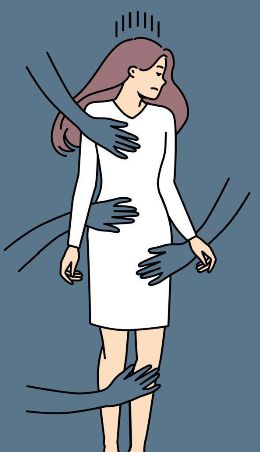
The second wave of shock and disbelief came from the responses to this behavior. The Law Society of Manitoba ruled to give Aquila a 30-day suspension and no known to me statement has been produced by them on the matter. The organization that makes it its mission to keep lawyers accountable, and possibly the only agency protecting female law students and lawyers in situations like this one, gave the harasser a month of bench time. Funny enough, after discussions about this situation, some of my colleagues have started to refer to the suspension as a ‘vacation’ and I cannot quite tell if they are wrong. The disciplinary panel that made the ruling referred to several important issues and concerns in their report: power imbalances; a wish to “adequately protect the public, the profession, its students, clients, and employees”; an acknowledgment that sexual harassment is a common problem in the legal profession; and an understanding that the consequences for such behaviors need to be severe enough for them to act as a deterrent. But these words lost their meaning when, with their ruling, the Society contributed to the culture of conformity with sexual harassment within the legal field. From the perspective of a young female law student, this ruling diminished my expectations of bodily autonomy within the legal field. Now, if someone violates my right to exclude men’s hands from my body, I expect that the only form of retribution from the Society would resemble a banishment to a time-out corner for the perpetrator.
From the perspective of a young female law student, this ruling diminished my expectations of bodily autonomy within
the legal field.”
A consecutive punch to the gut came from the reported letters sent to the disciplinary panel from the firm’s managing partner, a separate female partner, and Aquila’s fiancé – all in support of his character. As of November 2024, Aquila can still be found on the firm’s website and no statement to my knowledge has come from the firm regarding his unacceptable behavior. What that tells us is that he still has his job at a top law firm. The firm in question also does not fear public outrage, neither does it fears law students and graduates refusing to work there because of the firm’s complacency with sexual harassment within the legal field. Why should they? From everything I have been exposed to, the field seemingly diverts its eyes from morally and ethically wrong behaviors for the sake of financial gain and stability.
The actions of Aquila and the response from the Law Society of Manitoba have not only harmed the student that he harassed, but they also affected young female law students all over the country who are trying to make a name in this field, but who are often met with the harsh reality of disrespect and lack of accountability.
A Pattern Across Generations
This is not a sole incident: it is a mentality that poisons the field. While many hold an opinion that it is the older generation of lawyers that perpetuates these unacceptable attitudes towards women, the young professionals and students are also contributing to the problem. I have already encountered sexist remarks pronounced in a conversation by a fellow young law student (or, as the faculty likes to say, colleague, in an unfortunate anticipation that we might have to work with him in the future); and it has only been 2 months since I started my education at the time of the incident. For reference, imagine dipping a toe into the ocean and it being chomped on by a shark that you have not seen coming. Hearing a colleague state that he would not be able to marry a woman who has career aspirations impacted me, despite the fact that he believed that sharing his ‘preferences’ would only concern him.
Feelings of safety, respect and support are some of the bare minimum requirements that individuals entering the legal field."
A Frightening Example
His comfort with unprovokedly discussing the value of women being reduced to a caretaker for him and his children feeds into the already problematic attitude towards women. In his eyes, women seemed to be valued for our ability to reproduce and our nurturing qualities, not our contributions to professional developments and partnerships in relationships. It is reasonable to assume that this attitude might unconsciously impact the way this colleague interacts with his future co-workers, clients and other women in the legal community.
Consequently, what might seem to be a far-removed situation in Manitoba is a symptom of a systemic attitude that spans across the entirety of the legal field, affecting women all around the nation, including Ontario. Less than a year ago, Toronto Star published an article by Robert Cribb and Emma Jarratt echoing the previously outlined issues: “Sexual harassment, discrimination forcing women lawyers to quit. Some say the profession needs its ‘Me Too’ movement”**. Being the focus of the article, Toronto lawyer Martha McCarthy says that “[she] personally experienced (sexual harassment) in [her] professional life at the hands of judges, colleagues and clients at least once a week from the time [she] was called to the bar until today”. The article goes on to uncover that women outnumber men as law school graduates, but this demographic pattern is not reflected within the law firms: a large number of women are stepping away from their roles with “discrimination” and “harassment” commonly being cited as reasons.
Cribb and Jarratt go on to expose that few go through with formal complaints of harassment, and those that do often face repercussions at work or experienced dramatic alterations to their career trajectories. Being punished for standing up against disrespectable, unacceptable, and even illegal behavior is an unjust consequence. For a group of people that had to be assessed on their logical reasoning skills to enter the field and that prides themselves on their rationality the legal community is missing the mark on this. How can the people that are versed in law and ethics be so content with their colleagues committing actions that clearly cross legal and ethical boundaries?

The expectation is not for the lawyers committing acts of inappropriate behavior to be fired or jailed, as some might hurriedly assume my conclusion to be, but for female law students and lawyers to feel safe in their learning and working environments. Feelings of safety, respect and support are some of the bare minimum requirements that individuals entering the legal field, and any field for that matter, should be able to demand. The public incident that has inspired this article showed the legal community that Law Societies are not keeping lawyers as accountable as we would have hoped, and in result not providing female law students and lawyers with the needed sense of support and security of our bodily autonomy. Just like other responses from the Law Societies on various important issues, the ‘punishments’ exerted onto lawyers committing acts of sexual harassment feel remarkably performative.
Why Write an Article?
By expressing my disappointment with the ruling made by The Law Society of Manitoba, I am hoping to educate my fellow law students about the continuing problematic normalization of sexual harassment and disrespect within the field, but I am also hoping to inspire. To inspire future and current lawyers to learn about these issues, hold their colleagues accountable for inappropriate behavior and voice their opinions about the responses of the firms and Law Societies concerning these incidents. We cannot expect change without continuing to point out the need for it.
Editor's Note
The Editorial Team has include
supplemental resources for this article.
• The uOttawa Sexual Violence
Prevention and Response team at the
Human Rights Office can be reached
by email at respect@uOttawa.ca or by
an online form. The team can also be
reached at 613-562-5222.
• The Law Society of Ontario invites
people to contact them at 416-
947-3456 to inquire about sexual
misconduct complaint filling or to
anonymously raise concerns.