
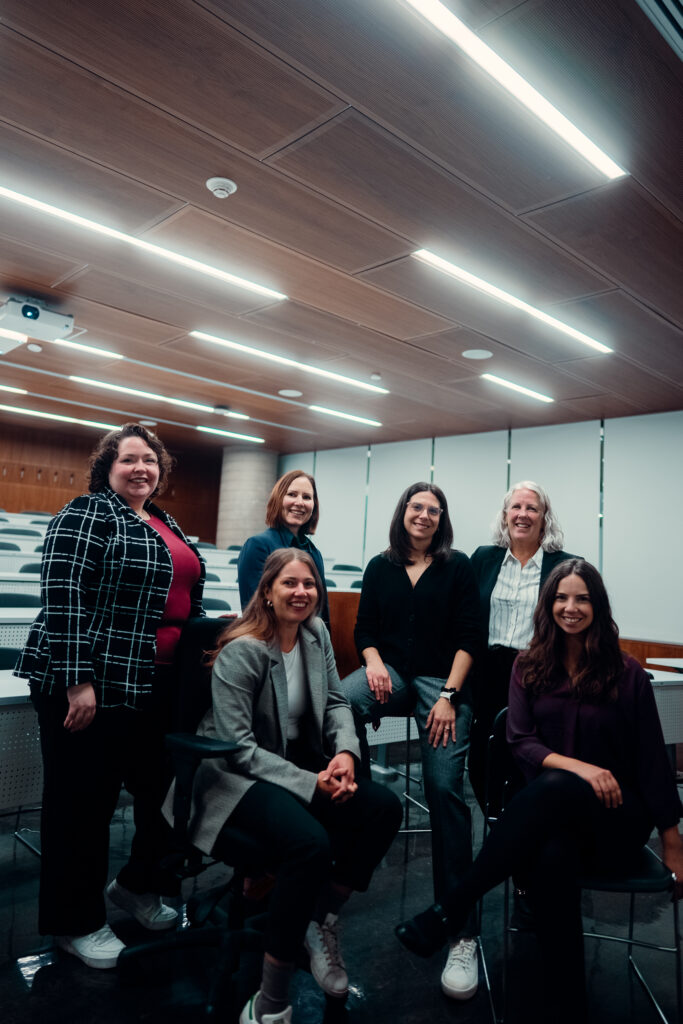

Jaiba: What is the CDC’S role at the school?
Alex: Yeah, so, our mandate is to help law students feel supported. And help them carve their own career path. And so we hope to help students discover what they’re interested in and what they’d like to do, set their goals and help them achieve them. We have a lot of different types of tools and services that we offer students in order to help them achieve those goals.
Students are welcome to use our services, such as one-on-one appointment bookings and attending programming. Some of them may be panels for some kind of career exploration, or we have other resources and tools for preparing for interviews and drafting cover letters and resumes,
So we’re kind of a hub. We do a lot of different things and provide a lot of different tools. But I think students know us mostly for organizing structured recruitment processes. That’s not all we do. It’s not the only reason we’re there. In fact, that’s not the only thing we’re interested in either. Because we know that students all have different needs and different interests, and it may not be something that they will find within a structured recruitment process.
Nathan: Given the heavy workload at CDC to meet student needs, what keeps the counsellors going? What keeps you guys coming back and like offering and helping students on a day-to-day basis?
Natasha: It’s really energizing working with high-performing students like law students. They’re really eager to learn and reach their full potential.
Uh, one, one analogy that I really like is that it’s like coaching athletes to go to the Olympics in the sense that, you know, there are all these really amazing candidates, even though there’s a lot of back to back appointments and lots of events going on and all of that, it’s, it’s actually often quite energizing because they give us a lot of positive vibes.
We’re kind of with them on this journey. Sometimes we’ll have students who come back and visit us regularly, so we can kind of see the progression and help them through the highs and the lows of their journey. So that’s something that is really helpful. Uh, just kind of the type of clientele that we’re working with.
With whatever their specific needs are. So, so there’s our team, and then it’s also like, kind of, okay, should we be reaching out to a professor? Should we be reaching out to the wellness center? Anything like that? So the students were well supported in all those different facets. Sometimes, you know, we also rely on our Nespresso machine to keep us going if it’s a particularly challenging day or if we had a bit of a rough start to the day, as everyone, sometimes the caffeine does the trick.
Jen: Lunch time walks, right?
Natasha: Yeah. Thanks for mentioning that, Jen. We really prioritize wellness.
Sometimes we’ll talk a little bit about work, but we also love, you know, just getting to know each other as human beings, how our families are doing, talk about our hobbies and things like that. So I think that the strong connection that our team has also helped. It just keeps us going. Just us taking care of ourselves because, you know, another analogy is if you’re in a plane and you need the oxygen mask, you should always put it on yourself first, because it’s hard to kind of care for others if you’re not taking good care of yourself.
Alex: Yeah. I think maybe one thing to add is when Natasha mentions the dynamic that we have within our team as well, so one of the things that students are sometimes surprised or don’t know is that we, we don’t all have the same background or training, right? I myself attended law school. I am a licensed practitioner who does not practice. I have my JD background, and I worked in the JD Advantage position in a not-for-profit, access to justice initiative. Before coming into my role here, Anna, another counsellor who’s not here today, also attended the University of Ottawa.
She did a combined JDMA program and went on to work in government global affairs. She worked in different countries and international law before coming here. And then we have these two lovely ladies who have their counselling accreditation. They both have a masters in educational counselling.
Natasha: Yeah, and it’s great. So we learn from each other. So in a sense, it’s almost like, uh, professional development on a daily basis. You know, we have different experts in various fields. And so sometimes we can learn more by going to see someone who’s like a legal expert for certain types of questions.
Jen: Yeah, but watching my colleagues like, like step off of their chairs and, and get up and. Grab their coat and go for a walk, and make time for that…I think it’s inspiring. Like it’s essential. It’s motivating, you know, and it’s like, okay, I need to be doing the same. Like, I need this break in my day.
Alex: And today it’s actually Jen who initiated the walk.
Jen: No, you did.
Alex: Oh. In the chat.
Jen: But then I don’t initiate!
Natasha: I was gonna say, really?
Nathan: So there’s a chat
Natasha: Oh yeah, there’s a chat!
Jen: The first time I actually said yes to a walk.
Alex: Oh, there you go.
Jen: I’m, I’m proud of myself. It’s just because our team has the pedometer challenge right now, so…no promises for next week.

Jaiba: Now, kind of moving more towards like a career slash interview. How do you suggest that students choose their specializations, and what are some ways that students can explore their interests?
Alex: Mm-hmm. There are a lot of different ways that students can explore their interests while they’re in law school. Some of those help manage through at the career center. So. You know, there’s a lot of experiential learning opportunities that students can, can, um, can look into during their law school.
Um, and it is as early as 1L where you can do moots, and you can do shadowing at the legal clinic. And, um, different things like that. Participating in student clubs and, and, um, all, all those different things. Um, but also, um, uh, internships, student-proposed internships, um, um, uh, fellowship opportunities during the summer.
They can apply for bursaries, and they can do, you know, prison law clinic or. Um, at the new placement with the Law Commission of Ontario. So there are a lot of different programs that run through our office, that run through the faculty, that students can, uh, do that are practical experiences that’ll help them determine what they’re interested in.
Um, but also it’s not necessary to choose your specialization while you’re in law school. And so it’s okay to have an idea of what you’re interested in or what you’d like to do, but you don’t have to specialize in any way. Mm-hmm. Um, right away, or you don’t, you know, it, it’s not, um, or if you specialize in something, but realize that your interests lie elsewhere in the future, it’s okay to shift.
So I think that it’s important for students to do exploration. Um, they might have even come into law school with. You know, something on your mind or a specific interest. But it’s good to keep an open mind and to try different things and be open to opportunities, um, because they might be surprised by what else is out there and what they’re interested in.
Those are different ways of, of, um, starting to get into the legal network and, and, uh, the legal community and, and, um, finding out. Um, you know, what people do and what law looks like in practice and what might be attractive or appealing to you or interesting to you. Um, and so, uh, those are different ways of, of helping you determine, you know, if you’d like to specialize and if so, in what?
Jen: So there’s no pressure to specialize in law school. No law student is a specialist in anything. And then frankly, some lawyers are generalists their entire careers and are very satisfied with the fine meaning in that general practice.
Mm-hmm. You don’t need to pressure yourself by finding that one thing that you’re supposed to be doing or finding that thing that you’re very passionate about. Some people just like to dabble, and they like to do a little bit of everything. And if that’s what makes you happy, then that’s what you should be doing.
Nathan: Okay. So, kind of on that note as well, how does the CDC work with firms in particular to support you all with students in recruitment processes?
Natasha: Yeah, I’m happy to jump in. One of them would be regular consultation and collaboration with employers and firms, networking, maintaining current contact information, soliciting job postings, advertising, and the 3L resume book, which is, um, a list of the resumes of students seeking. So if we get sort of some last-minute emails requesting a position to be filled, we have that handy. There’s also the annual employer round table. Uh, we host large-scale recruitment events such as Career Connections coming up in March. That’s probably our biggest one. Uh, managing OCIs, forming partnerships for experiential learning.
Um. I’d say those are probably the main ones. Uh, there’s also sometimes the opportunity to connect with firms at NALP Events. Um, there’s even subcommittees now, so for example, I’m on the wellbeing section. Some members are part of, um, uh, I think the JD Advantage subcommittee. Uh, so, so there are kind of ways to connect the big picture.
Alex: Beyond that, we have a lot of different touch points with employers and especially those that participate in structured recruitments. We get to know them so well, like they have primary contacts that they share with us, and we’re able to reach out to them, um, you know, with questions every year. Um, and selecting who will be participating on the panels. We try to rotate. Um, but sometimes it’s a firm or an employer that’s reached out to us, or an alum from their firm that’s reached out to us before we even went ahead with invitations.
So it’s not because we got a sponsorship or anything, ’cause we try to do a little bit of a rotation or we try to do a little bit of a mix. So if we know that, um, you know, it’s, we can have a business law firm and, uh, and a, um, you know, uh, litigation or is it a big national firm and a couple of smaller firms or regional firms.
We try to provide a little bit of diversity. Uh, we invite. The firms or the employers, and not the specific panellists. So, you know, the firms or employers will, or the organizations will select their own representatives to attend. Mm-hmm. Um, but um, but we do, we do try to do a little bit of a rotation when it’s a panel for recruitment. We also have regular contact with the employers, um, formally through recruitments, through job postings that they’re sending our way. Then the less formal, I guess, is really through these working groups. So Natasha mentioned the NALP is the National Association for Law Placement.
It’s like, uh, an association across Canada and the US and other law schools, firms, recruiters, they’re all a part of this association. And so we get together with the firms this way, the other schools this way. Um, and we’re able to connect, um, informally and, and, uh, attend also professional development, um, alongside them.
So those are different ways that we, we are able to, um, to work with or get to know the firms, uh, get to know their needs or talk about, you know, our students in, in, in a general sense of, you know, what, what the school has to offer and what our students are interested in, where they wanna land. And then sometimes that leads to more one-on-one interactions.
Jen: Um, and, uh, yeah, being located in Ottawa too, we can leverage, um, you know, our connections here. The CCLA is the local Bar Association of Ottawa lawyers. We’re strengthening partnerships there. We have working relationships with, uh, different government offices, um, the courts, right? So we’re constantly in communication with those Ottawa local employers.
We have an annual Ottawa employer round table that we invite all our Ottawa employer representatives to participate in, to have, you know, ongoing discussions about the market, recruitment and everything else. So, yeah.
Jaiba: In that vein, about recruitment. Specifically, BigLaw recruit. Those statistics are a bit terrifying. I believe Nathan used the word “Harrowing”. How can a student and how can a student stand out in such a cutthroat numbers game?
Natasha: One thing that we often start by pointing out is a little bit obvious, but if you don’t apply, you have zero chances of getting it. If you apply, you at least have a chance. So that’s sort of the starting point. Don’t cut yourself out, like give yourself a chance, especially if it’s something you really, really want. So that’s kind of one piece of it. And then there’s also, um, there are many factors that we cover.
So, being authentic, giving yourself a chance, but also coming to see us so we can review your documents, so we can coach you in an interview and really help you, uh, put your best foot forward. Mm-hmm. Grades are one of the factors that they’ll look at. But there are also many other things in terms of, you know, what are your extracurricular activities, what are you passionate about?
Alex: Because the grades, it goes without saying that grades are important in law school. And I think students know that coming in.
Nathan: So that’s not the one thing we’re very stressed about all the time, consistently.
Alex: So, you know, that’s something, you know, and grades may determine which opportunities you have access to. Mm-hmm. Um, because some employers could, can be, you know, selective and looking for high performing academic students. Mm-hmm. But it’s not the only thing that’s being looked at. And so that’s why Natasha’s mentioning all of the other experiences or things that, um, may help you stand out or may be able to present a good application and any real life work experience, or volunteer experience, or community involvement.
Can be used as some way to, um, make you stand out. So whether it be work that you were experienced from a legal setting or something completely unrelated, like working in, um, in a summer day camp, um, your experience that you have there, these are skills that you’re, um, going to be able to show, uh, that you will be a productive, uh, person, a member of their team, um, that you, maybe you have, uh, good communication skills.
Um, and so that’s important for them to know, uh, what type of experience you’ve had in that sense. And we already mentioned a bunch of different opportunities that students have access to, um, in law school and at the law school. But it’s not just these; it’s not just through the Ottawa Law Review or through the clinic or some of those staples that we all hear about.
It’s through creating your own student-proposed internship or, um, volunteering in an opportunity outside of campus or, um, that job that maybe you’ve had since before starting law school that you’ve been loyal to for six years. Um, that might be something that helps you stand out because you. Shown commitment towards an employer.
You’ve maybe you’ve, you’ve gone up in ranks while you were there, and that’s illustrated in your resume. Um, but yeah, I mean, it’s, it’s obvious they’re looking for someone that has good legal research and legal writing and, and, um, that, uh, maybe strong oral advocacy. Um, but what you’re able to illustrate with the experience that you have is, is probably, um, more of those transferable skills at this point.
Jen: The grit, the adaptability, your ability to be resilient, um, being professionally mature if you’ve worked. So if you have work experience, you’re more professionally mature than someone who has purely an academic background. Um, if you’re emotionally intelligent, if you have interpersonal skills, if you can solve problems. If you work hard, like you have a hard, like a good work ethic, if you can demonstrate initiative, those are the things that are gonna help you beyond grades. Um, and I would just add to like, um, keep things in perspective when approaching recruitment. The 1L recruit, the 2L recruit, is not the only way to get into big law, first of all, you have to self-assess and determine… “is big law where I wanna be? Is that what I wanna do? Is that what I came to law school for? Or, or, or do I wanna do that because everyone else around me is doing that?” Once you’ve determined that it’s really truly what you want to do and pursue, understand that law school recruitment is not the only way to get there.
Natasha: Yeah. And also, if ever they’re unsure, um, sometimes it can be good to speak with someone who kind of works in big law and get their perspective, whether it’s going to a webinar, a panel.
Uh, we also have some great mentorship programs where we can put students in touch with, uh, either students who are currently there or, uh, employers that have a few years of experience under their belt, just to kind of share their perspective. And like Jen said, you know, just start by ensuring that it’s actually what you want.
So start by sort of exploring and researching and talking to people when you’re looking at, for example, a job posting, it’s important to use their keywords and skills so that they see you have what they’re looking for. But it’s also important to just add your own little flavour and any assets that you have and tell your story in a little bit of a unique way.
If we go to a resume format, we have spoken with many employers, and they do like a black and white standardized follower templates kind of, uh, application. But you can be creative, like your story is a unique extracurricular activity, or some special place where you volunteered or use an interesting story. That, that kind of follow-through in your resume, those are ways to stand out while still giving them the kind of traditional classic-looking documents. Highlight the experiences in a way that they’ll see the skills that you’ve acquired and that, that are transferable in that work environment.
Nathan: To wrap up the interview, what’s one collective thing counsellors would want to see at the school? Okay. It’s, it’s, I know it’s hard to pick.
Alex: One of the things that you, uOttawa students have traditionally been known for is, um, uh, being very collaborative and maybe not as competitive amongst themselves as students from other faculties. And is that true? I don’t know. I haven’t been anywhere else than here, but that’s something that’s often come up. Sometimes it’s a comment or a remark that’s made by an employer or a firm or organization, but that’s something that I think we would all like to see continue. We hope that they’re going to continue to be collaborative, to feel like this is a place for them to work together, to grow together, to make mistakes and learn from them, and build a network that’s going to go beyond law school. And so that’s not an easy, let’s say, culture to maintain, but it’s something that we feel that’s been here for a while and that we hope students will continue.
Natasha: Yeah. And another thing we had mentioned was, um…
Alex: We said one thing!!! I’m kidding! But you can decide the one after you hear the other like, ’cause it’s also like you’re looking for something maybe that we would like differently. Correct.
Natasha: So that was kind of what we like and what we’re hoping continues and something that we’re hoping might shift a little bit.
Mm-hmm. Which might stem from that is just hoping students can have a little bit more compassion for themselves and for others, which goes with being a bit of a high achiever, right? Mm-hmm. But finding that balance where you’re not being so hard on yourself that you’re not enjoying the process and the experience. So, giving themselves a little bit more grace, and going back to the corny quotes, one that I often refer to is… like, do your best and let the universe take care of the rest. In the sense that you have to sort of trust us.
You have to trust the process. You have to trust the things that are out of your control, that you’re going to end up in an amazing place.
Alex: We’d also like a new building.
Natasha: There are new little couches, though. Did you see?
Alex: That’s good, so cute. I was so impressed with those.
Natasha: I’m like, hey, it’s one baby…step in the right direction.